5 Tips for SR22 Bond After Car Accident

sr22 bond after accident

Many drivers don't realize that an SR-22 bond isn't insurance but a certificate proving you carry the required coverage after a serious violation. Understanding how to navigate the SR-22 process can save you from penalties and extended filing periods. By following a few essential tips, you can guarantee compliance and avoid unnecessary complications. Let's explore what you need to know to manage your SR-22 bond effectively.

Key Takeaways

  • Understand your state's specific SR-22 requirements and duration after a car accident to ensure compliance.
  • Maintain continuous insurance coverage to avoid penalties and extended SR-22 obligations.
  • Consult with your insurance provider to file the SR-22 bond promptly after the accident.
  • Regularly review your driving history and vehicle type, as they influence your SR-22 bond rates.
  • Track SR-22 expiration dates and renew your bond on time to prevent lapses in coverage.

Understand the Purpose of SR-22 Bonds
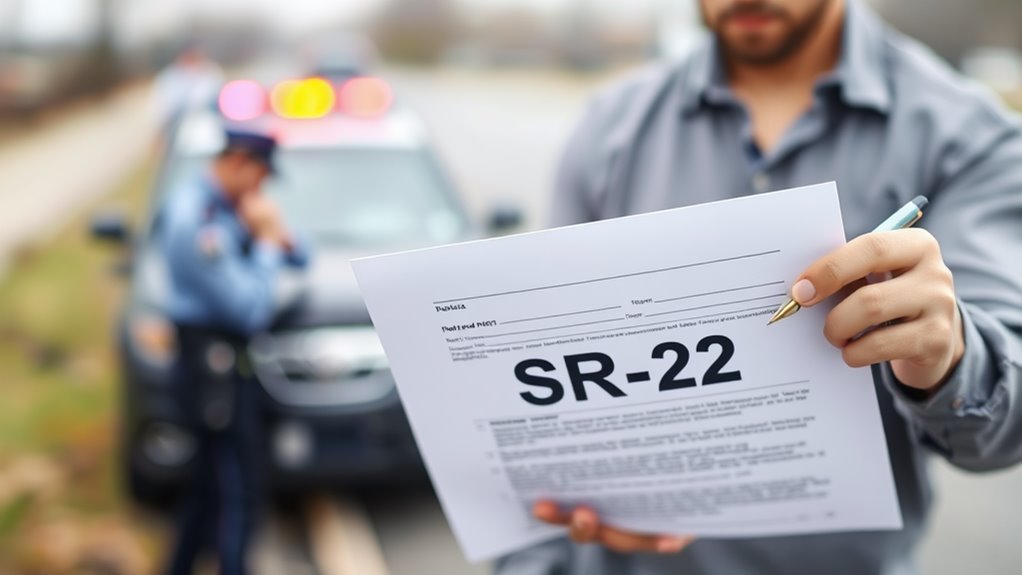
sr 22 bond explanation needed

Understanding the purpose of SR-22 bonds is fundamental for drivers facing challenges in securing traditional auto insurance. An SR-22 bond acts as an alternative to standard coverage, providing a financial responsibility guarantee through a surety company.

If you're unable to obtain conventional insurance due to a driving offense or lack of coverage, this bond becomes significant. It's essential to recognize that SR-22 bonds differ from SR-22 insurance, as they primarily serve to verify your financial capability in case of accidents. Additionally, not all states accept these bonds, making it crucial to familiarize yourself with local regulations. Ultimately, SR-22 bonds assist in reinstating your driving privileges while ensuring you meet the required liability amounts. Moreover, the surety company guarantees required liability amount on behalf of the driver, providing peace of mind during the process. This guarantee is particularly important because many states mandate financial responsibility from drivers involved in accidents.

Know Your State's SR-22 Requirements

Maneuvering your state's SR-22 requirements is vital, especially after a driving incident that impacts your insurance options.

Each state enforces its own SR-22 duration and conditions, typically ranging from one to three years. Serious traffic violations, such as DUIs or reckless driving, often trigger this requirement, but some states also impose it for non-driving issues like unpaid child support.

It's important to maintain the state-specific minimum liability coverage throughout the SR-22 period. For instance, states like Alabama and Arizona usually require three years, while Connecticut mandates just one year.

To guarantee compliance, always consult your state's Department of Motor Vehicles for the most accurate and up-to-date information regarding your SR-22 obligations.

Compare Insurance Providers for Best Rates

As you navigate the process of securing SR-22 insurance, comparing different providers is essential for finding the best rates that meet your needs.

Consider the following key factors when evaluating your options:

When choosing SR-22 insurance, carefully evaluate your driving history, vehicle type, location, coverage levels, and available discounts.

  • Driving History: Past infractions can increase premiums considerably.
  • Vehicle Type: More expensive vehicles often lead to higher insurance costs.
  • Location: Areas with high accident rates might raise your rates.
  • Coverage Levels: Minimum coverage is cheaper but offers less protection.
  • Discounts: Look for bundling, good driving, and military service discounts.

Maintain Continuous Coverage to Avoid Penalties

avoid penalties with coverage

Comparing insurance providers for the best rates is just the first step in managing SR-22 requirements; maintaining continuous coverage is equally significant. A lapse in coverage can lead to penalties, including a suspended license and extended SR-22 filing periods.

States require proof of ongoing coverage to demonstrate your financial responsibility, and insurers must report any gaps to the authorities, triggering penalties. Regularly reviewing your policy guarantees you avoid gaps that could prolong your SR-22 obligations.

Stay Informed About Filing and Renewal Processes

Staying informed about the filing and renewal processes for your SR22 is essential, especially after an accident, as it helps you avoid unnecessary penalties and complications.

Staying updated on your SR22 filing and renewal is crucial to avoid penalties and complications after an accident.

Here are key points to keep in mind:

  • Filing Timeline: It may take over 30 days for your SR22 certificate to be processed.
  • Insurance Responsibility: Your insurance company will file the SR22 with your state's DMV.
  • Renewal Requirements: Regularly renew your SR22 to prevent lapses in coverage.
  • Continuous Coverage: Notify your insurer of any changes to your driving status.
  • Expiration Dates: Track SR22 expiration dates diligently to verify timely renewals.

Conclusion

In steering through the complexities of SR-22 bonds, remember that "an ounce of prevention is worth a pound of cure." By understanding your state's requirements, comparing insurance options, and maintaining continuous coverage, you can guarantee compliance and avoid unnecessary penalties. Keep yourself informed about the filing and renewal processes to stay ahead. With diligence and careful planning, you can effectively manage your SR-22 bond and regain your driving privileges with confidence.

Find Budget-Friendly SR22 Insurance Near You

affordable sr22 insurance options

Many drivers aren't aware that SR-22 insurance isn't a specific type of insurance, but rather a certificate proving you carry the required liability coverage. This can create confusion when searching for budget-friendly options. To secure the best rates, it's crucial to compare quotes from various providers and understand your state's requirements. By focusing on certain strategies, you can find an affordable policy that fits your needs. What steps should you take next?

If you've recently faced a serious driving offense and need to obtain SR-22 insurance, you might be concerned about the costs involved. An SR-22 is fundamentally a certificate that your insurance company files with the state to prove you have the minimum liability coverage required after incidents such as DUIs. [An SR-22 insurance policy is often required for a specified period, typically ranging from three to five years, depending on the state and nature of the offense.]

The good news is that while SR-22 insurance can be costly, there are ways to find budget-friendly options tailored to your circumstances. The cost of SR-22 insurance varies depending on multiple factors, including the severity of your violation, driving history, age, and the insurance company you choose. Typically, insurance providers charge a small filing fee for the SR-22, usually under $50.

However, as a high-risk policyholder due to your driving record, your premiums will likely be higher than those for standard insurance. If you don't own a vehicle, consider a non-owner SR-22 policy, which can be more affordable since it only provides liability coverage.

To find budget-friendly SR-22 insurance, start by comparing quotes from various providers. Major companies like Progressive, Geico, and State Farm are known for offering relatively affordable rates for SR-22 insurance, especially in cases of major violations. Progressive has the lowest average SR-22 liability insurance cost at $1,286 per year, making them a strong contender for cost-conscious drivers.

If you're looking for regional options, Erie and Auto-Owners often provide cheaper rates, particularly for minor offenses. If you're a military member or associated with one, you might also want to check USAA, as they offer competitive rates tailored for that demographic.

Using online tools can notably streamline your search for affordable SR-22 insurance. Many platforms allow you to quickly compare quotes from multiple insurers, helping you identify the best rates available.

When reviewing your options, be mindful of discounts and add-ons. Some policies may come with unnecessary coverage that can inflate your premiums. Instead, focus on what you genuinely need and consider raising your deductibles to lower your monthly payments, though keep in mind this increases your out-of-pocket costs if you need to file a claim.

It's essential to stay informed about state regulations regarding SR-22 insurance since requirements can vary considerably. Some states don't require an SR-22 for certain offenses, while others may impose specific liability coverage amounts. Understanding the specific state requirements is crucial to ensure compliance and avoid penalties.

Make sure you understand your legal obligations, as lapses in insurance can lead to serious consequences.

Finally, never underestimate the value of consulting local insurance agents. They can provide insights into state-specific regulations and help you navigate the often complex landscape of high-risk insurance.

Conclusion

Finding budget-friendly SR-22 insurance doesn't have to feel like searching for a needle in a haystack. Picture yourself comparing quotes, each one a stepping stone toward peace of mind. By tapping into the resources available—online tools, local agents—you can navigate the maze of high-risk insurance with confidence. Remember, your journey to affordable coverage can lead to brighter roads ahead, where financial stress melts away and you can focus on what truly matters: driving with assurance and freedom.

5 Best Times to Cancel SR22 Insurance

optimal sr22 insurance cancellation

If you've been required to carry SR-22 insurance, knowing the right moments to cancel it can save you money and hassle. Understanding when it's appropriate to let go of this specialized coverage is essential for maintaining compliance and optimizing your insurance costs. Consider key situations that might signal it's time to take that step. Let's explore the five best times to cancel your SR-22 insurance and make informed decisions moving forward.

Key Takeaways

  • After successfully completing the required SR-22 period, verify with your DMV before cancellation.
  • Once all court orders and penalties are cleared, ensure compliance before canceling SR-22.
  • When transitioning to a standard insurance policy, compare quotes and confirm no coverage gaps.
  • At the end of the financial year, review your SR-22 status and its impact on premiums.
  • Following a change in your driving status or needs, assess your insurance requirements before cancellation.

After Successfully Completing the Required SR-22 Period

sr 22 period completion achieved

Once you've successfully completed the required SR-22 period, it's crucial to take the right steps to cancel your SR-22 insurance.

First, verify the end date of your SR-22 requirement with your local DMV or insurance provider. You'll need confirmation from the state that the SR-22 is no longer necessary. It's important to understand that the SR-22 insurance serves as a certificate of financial responsibility mandated by the state.

Verify the end date of your SR-22 requirement with your DMV or insurance provider for confirmation that it's no longer necessary.

Next, contact your insurance company to initiate the cancellation. They'll file an SR-26 form with the DMV to notify them of the cancellation, which serves as proof. It's important to note that the SR-22 does not drop off automatically, so ensure you follow the correct procedures.

Remember to maintain continuous insurance coverage until you cancel, and make sure your new policy is in place before the cancellation date to avoid gaps.

Finally, keep written confirmation of your SR-22 cancellation for your records and future reference.

Once All Court Orders and Penalties Are Cleared

Completing the required SR-22 period is just one step in the process of canceling your SR-22 insurance. Before you proceed, make certain that you've adhered to all court mandates, such as completing education classes or treatment programs related to DUI offenses.

Reviewing your court documents can help clarify any remaining requirements. It's crucial to maintain continuous insurance coverage during this period to avoid penalties or extended SR-22 requirements.

Once all court orders and probation periods are completed, contact the DMV to confirm your SR-22 obligation is fulfilled.

Finally, notify your insurance provider of your intent to cancel, making sure they update the DMV accordingly. Keep all documentation for your records to safeguard against future issues.

When Transitioning to a Standard Insurance Policy

Changing to a standard insurance policy can be a significant relief after fulfilling your SR-22 requirement.

Once you've met the mandated period, it's vital to compare quotes from various providers to find an affordable plan. Maintaining continuous coverage throughout your SR-22 duration is essential to avoid any legal issues during this change.

Make sure there's no gap in your insurance coverage, as this could lead to complications, like license suspension. Confirm with your insurance company and the Department of Licensing that your SR-22 requirement has officially ended.

If you've maintained a clean driving record, expect potential reductions in your premiums, which can help restore your financial stability as you move forward with standard insurance.

At the End of a Financial Year for Review

financial year end review

As you approach the end of the financial year, it's a smart move to review your SR-22 insurance status and its impact on your overall financial health.

Assess your premiums to determine if maintaining the SR-22 affects your rates. Check your state's specific requirements, as the SR-22 duration can vary, typically lasting three years.

Be aware that any lapse in coverage could lead to penalties, such as license suspension. Additionally, consider potential cost reductions if you have a clean driving record.

Comparing new insurance quotes after cancellation can help you find better rates. Finally, confirm you notify the DMV when you've fulfilled your SR-22 obligations to avoid legal complications.

Following a Change in Your Driving Status or Needs

When your driving status or needs change, it's important to reassess your SR-22 insurance requirements. Here are key considerations to keep in mind:

  1. Change in Vehicle Ownership: Notify your state if you sell or transfer a vehicle, and verify the new vehicle is properly insured.
  2. Moving to a New State: Some states don't require SR-22 filings; check if you still need it after your move.
  3. Altered Driving Habits: Improved driving can lower premiums; adjust your insurance policy accordingly.
  4. Financial Changes: If your budget tightens, shop for more affordable SR-22 options to maintain compliance.

Timely adjustments can prevent penalties and guarantee you meet all legal obligations.

Conclusion

When it's time to cancel your SR-22 insurance, think of it as shedding an old skin. You've achieved your goals, cleared penalties, or found a better policy—each moment presents a chance for renewal. By evaluating your situation at these key points, you guarantee you're not just compliant but also optimizing your coverage and costs. Embrace these opportunities to reassess your insurance needs, keeping your driving journey smooth and financially sound.

5 Best Advantages of SR22 for Company Vehicles

sr22 benefits for companies

When it comes to managing company vehicles, understanding the advantages of SR22 can greatly impact your business operations. This specialized form of insurance not only guarantees legal compliance but also provides essential financial protection. You'll find that it offers tailored coverage options and helps control costs through competitive quotes. Plus, the efficient filing process streamlines compliance efforts. But what are the specific benefits that make SR22 indispensable for your business?

Key Takeaways

  • Ensures legal compliance for company vehicles, protecting businesses from penalties and license suspensions associated with traffic offenses.
  • Provides proof of financial responsibility, meeting state minimum liability coverage requirements, safeguarding company assets against accidents.
  • Offers tailored coverage options for high-risk drivers, allowing businesses to customize policies based on their specific operational needs.
  • Streamlines the filing process through electronic submissions, reducing time and errors while ensuring timely compliance with SR22 regulations.
  • Assists in cost management by enabling comparisons of competitive quotes, helping businesses find affordable premiums and potential discounts.

Legal Compliance and Business Continuity

regulatory adherence ensures resilience

While running a business, ensuring legal compliance is essential, especially when it comes to vehicle operations. Understanding SR22 requirements is key, particularly if your drivers have had traffic offenses. States like Texas mandate minimum liability coverage as part of SR22 filings, reinforcing the need for compliance. The filing process requires you to submit documentation through an authorized insurance provider, which handles the submission and cancellation of SR22 forms. Additionally, maintaining SR22 certification helps prevent penalties such as license suspension, which can impact your business operations. Each state has unique regulations regarding the duration and conditions of SR22 requirements, so staying informed is vital. For instance, SR-22 insurance can be required for up to three years, depending on the state and the type of violation. By maintaining continuous coverage, you prevent potential business interruptions caused by license suspensions. Ultimately, effective SR22 compliance not only safeguards your operations but also solidifies your commitment to regulatory standards.

Financial Protection Against Liability Risks

Securing financial protection against liability risks is essential for any business that operates vehicles. SR-22 insurance provides proof of financial responsibility, guaranteeing that your vehicles and drivers meet state minimum liability coverage requirements.

By maintaining SR-22 coverage, you mitigate potential financial losses from accidents, protecting your business assets from substantial legal liabilities. Each state has specific regulations regarding SR-22, often requiring coverage for several years, which guarantees ongoing protection.

Maintaining SR-22 coverage protects your business assets from legal liabilities while ensuring compliance with state regulations.

While premiums may increase due to the associated risks, the benefits far outweigh the costs. Additionally, even businesses without owned vehicles can secure protection through non-owner SR-22 policies.

This strategic approach not only complies with laws but also safeguards your company's reputation and financial stability.

Tailored Insurance Coverage Options

Tailored insurance coverage options are vital for businesses that rely on vehicles, as they allow you to customize your policy to meet specific needs and adhere to state requirements.

SR22 insurance guarantees compliance with local regulations, covering various vehicle types and offering higher limits for commercial vehicles. If you have high-risk drivers on staff, an SR22 policy provides necessary liability coverage.

Additionally, non-owner policies are available for employees using personal vehicles, safeguarding your business without requiring ownership. By selecting extensive coverage options and integrating services like roadside assistance, you enhance your protection.

Digital platforms streamline policy management, making adjustments easy, while multi-policy discounts can lead to significant savings. This flexibility is essential for managing your unique business risks effectively.

Cost Management Through Competitive Quotes

competitive quotes for cost management

When managing costs for SR-22 insurance, comparing quotes from multiple insurers is essential to finding the most affordable option for your business. Premiums can vary dramatically, with averages ranging from $662 with Progressive to over $1,400 with GEICO. By obtaining several quotes, you can identify significant savings opportunities.

Additionally, consider filing costs, typically under $30, and remember that the high-risk nature of SR-22 requirements often drives up insurance rates. Each state's unique coverage mandates also impact pricing.

Opting for extensive coverage may help you manage expenses, while bundling policies or enrolling in defensive driving courses can yield further discounts. Being proactive in your comparison will ultimately lead to more cost-effective insurance solutions for your company vehicles.

Efficient Filing Process and Long-Term Planning

While managing the complexities of SR-22 filings for company vehicles, an efficient process can greatly reduce both time and errors.

Automating the filing process allows insurers to submit SR22 and SR26 records electronically, typically in batches, ensuring timely communication with state agencies. This system facilitates swift processing, often yielding responses by the next business day.

For long-term planning, maintaining continuous SR22 coverage is essential; lapses can lead to penalties or license issues. Regular renewal reminders and timely submissions of SR26 forms—10 days in advance—are vital for compliance.

Conclusion

In today's fast-paced business world, having SR22 for your company vehicles isn't just smart; it's essential. You're not just ensuring legal compliance but also safeguarding your bottom line against unforeseen liabilities. With tailored coverage and competitive quotes, you can tailor your approach to fit your unique needs. Plus, the efficient filing process saves you time and headaches. Embracing SR22 now is like using a smartphone instead of a flip phone—it's a game-changer for your business continuity.

Debunking Myths About SR22 Filings

sr22 filing misconceptions clarified

Maneuvering the maze of SR-22 filings can feel like wandering through a fog—uncertainty looms at every turn. Many drivers have misconceptions about what SR-22 actually is, often mistaking it for an insurance policy or fearing it's a lifelong burden. Understanding the truth behind these myths is essential for high-risk drivers. What you discover might change your perspective on compliance and insurance altogether.

When you hear the term SR-22, it's easy to confuse it with an insurance policy, but that's a common misconception. An SR-22 is actually a form that proves you have auto insurance that meets your state's minimum coverage requirements. If you're classified as a high-risk driver due to offenses like DUIs, reckless driving, or driving without insurance, your state may require you to file this form to demonstrate financial responsibility and reinstate your driving privileges. Significantly, the SR-22 is an endorsement on your existing policy and isn't a standalone insurance policy.

You might wonder about the costs associated with an SR-22. While there's a filing fee that usually ranges from $15 to $50, the real expense lies in the increased premiums you'll face as a high-risk driver. The SR-22 itself doesn't incur monthly payments beyond that initial fee, and you may find that you can manage costs by comparing quotes and considering bundling your insurance. Though full coverage isn't required, liability coverage is mandatory, which can help you stay compliant without breaking the bank.

Costs associated with an SR-22 include a filing fee and increased premiums, but comparing quotes can help manage expenses.

One of the biggest myths surrounding SR-22s is that they're a permanent requirement. This isn't the case; SR-22 filings are typically temporary, lasting anywhere from two to three years, depending on your state. SR-22 filings are necessary for license reinstatement It's also worth noting that you don't need to own a vehicle to have an SR-22 filed. You can switch insurance providers while maintaining your SR-22 coverage, but you'll need to verify there are no gaps in your coverage to avoid penalties.

Understanding the true purpose of an SR-22 can help alleviate stress. Many people mistakenly believe it's an insurance policy, but it's simply proof that you have the required coverage. Maintaining this coverage is essential for preventing license suspension and resetting SR-22 timelines. In addition, the SR-22 doesn't directly impact your credit score, which is another common concern.

In terms of the filing process, requirements can vary by state. Typically, your insurance company will file the SR-22 on your behalf. If you fail to maintain continuous coverage, you risk facing penalties, including a potential extension of the SR-22 requirement. Specialized insurance companies can assist high-risk drivers in finding affordable options, guaranteeing compliance with state regulations.

Lastly, your insurance rates will likely increase once you're classified as a high-risk driver. Different insurers evaluate risks in unique ways, so it's wise to shop around. Taking defensive driving courses may help you qualify for discounts, and maintaining a clean driving record can improve your rates over time.

Conclusion

To sum up, understanding SR-22 filings can greatly ease your worries as a high-risk driver. It's not an insurance policy, but a proof of compliance that's usually required for just a couple of years. By maintaining continuous coverage and seeking help from specialized insurers, you can navigate this process with confidence. Coincidentally, clearing up these myths could just be the first step toward regaining your peace of mind and getting back on the road.

10 Tips for Foreign License SR22 Insurance

foreign license sr22 insurance tips

Maneuvering SR-22 insurance with a foreign license may seem challenging, but it doesn't have to be. Understanding the specific requirements and options available to you can greatly simplify the process. By knowing what insurers accept foreign licenses and how to maintain compliance, you can find the right coverage. Let's explore the essential tips that will help you manage your SR-22 obligations effectively and potentially save you money in the long run.

Key Takeaways

  • Research insurers that accept foreign licenses; options like Geico and Erie Insurance offer competitive rates for SR-22 coverage.
  • Gather required documentation, including your foreign driver's license, personal identifiers, and details about the offense necessitating the SR-22.
  • Maintain continuous coverage to avoid penalties and ensure compliance with SR-22 requirements; consider automatic payments to prevent lapses.
  • Regularly communicate with your insurer to monitor SR-22 status and stay informed about any changes in your coverage or requirements.
  • Report any changes in personal circumstances, such as address or vehicle, promptly to your insurer to maintain compliance and avoid lapses in coverage.

Understand SR-22 Basics for Foreign License Holders

sr 22 for foreign drivers

Understanding SR-22 basics is essential for foreign license holders maneuvering the complexities of auto insurance in the U.S.

An SR-22 isn't an insurance policy but a certificate proving you have the required minimum coverage mandated by your state. Typically, the DMV or a court will require it following certain driving offenses. Your insurance company files the SR-22 with the state DMV, and you'll need to maintain this coverage for three years from the offense date. An SR-22 is generally required for three years from the date of the violation, although this duration can vary depending on the specifics of the offense. Additionally, the SR-22 form serves as proof that you are meeting your state's liability insurance requirements.

If you don't own a vehicle, non-owner policies provide the necessary liability coverage to comply. Knowing these fundamentals can help you navigate the requirements efficiently and avoid potential legal complications.

Check Your Eligibility for SR-22 Insurance

Once you're familiar with the SR-22 basics, it's important to check your eligibility for SR-22 insurance.

First, understand that SR-22 requirements differ by state and typically arise from specific driving offenses like DUI or driving uninsured. Some states, such as New York and New Jersey, don't require SR-22 at all.

SR-22 requirements vary by state and often stem from offenses like DUI; some states, like New York and New Jersey, don't require it at all.

As a foreign driver, you must comply with local insurance laws, which may include having a valid foreign license or international driving permit.

Not every insurer offers SR-22 coverage, so shop around to find one that accepts foreign licenses and can file the SR-22 form.

Additionally, be prepared for higher premiums due to the increased risk associated with SR-22 insurance.

Research Insurers Accepting Foreign Licenses

Finding insurers that accept foreign licenses can be challenging, especially when you're also managing the complexities of SR-22 insurance.

Start by looking at companies like Geico, which offers budget-friendly rates starting at $44 for international license holders.

Erie Insurance provides competitive options with a minimum coverage around $52 monthly, while Allstate offers robust protection, albeit potentially at higher premiums.

Farmers Insurance specializes in thorough coverage catering to unique needs, including those with international licenses.

Additionally, State Farm's nationwide availability guarantees experienced agents can assist you.

Be certain to compare rates and policy options, considering your driving experience and location, to find the best fit for your SR-22 insurance needs.

Gather Necessary Documentation for SR-22 Filing

prepare sr 22 paperwork needed

To secure your SR-22 insurance, gathering the necessary documentation is essential.

You'll need to make sure you have everything ready for a smooth filing process. Here are the key documents you should prepare:

  • Driver's license information: Include your license number and issuing state.
  • Personal identifiers: Gather your date of birth and Social Security number.
  • Insurance policy details: Have your current policy number and the effective date of the SR-22.

Additionally, be prepared to provide information about the offense leading to the SR-22 requirement, as well as your vehicle details, like the VIN.

Having these documents organized will help streamline your SR-22 filing and avoid unnecessary delays.

Compare Rates From Different Insurance Providers

When securing SR-22 insurance, comparing rates from different providers is essential to guarantee you're getting the best deal possible.

For instance, Erie typically offers the most affordable full-coverage SR-22 quotes at an average of $1,658 annually, especially for minor offenses. In contrast, State Farm and Auto-Owners present competitive options, with State Farm averaging about $2,276.

Keep in mind that full-coverage policies tend to have higher premiums due to added features like collision and extensive coverage.

While companies like Geico and Progressive provide SR-22 coverage, their rates are generally higher than Erie's.

Consider Non-Owner SR-22 Policies if Applicable

Non-owner SR-22 policies can be a smart choice for drivers who need to maintain insurance without owning a vehicle. These policies not only comply with state regulations but also provide essential benefits, particularly for those with a troubled driving history.

Here are key aspects to take into account:

  • Cost-Effectiveness: Non-owner policies are usually cheaper than standard auto insurance.
  • Liability Coverage: They offer protection against bodily injury and property damage when driving non-owned vehicles.
  • Flexibility: Coverage applies to rentals or borrowed vehicles, ensuring you're protected regardless of the car.

If you're facing license suspension or simply don't own a vehicle but need to drive, a non-owner SR-22 policy can help you stay compliant while saving on costs.

Review State-Specific SR-22 Regulations

state sr 22 regulations overview

Understanding the specific SR-22 regulations in your state is crucial, as these rules can greatly affect your insurance requirements and driving privileges. Each state has unique filing requirements, coverage amounts, and durations for SR-22 forms.

For instance, California mandates specific liability limits and typically requires SR-22 for three to five years, depending on the offense. In contrast, states like Florida and Virginia may necessitate FR-44 forms with higher limits for serious violations.

Additionally, fees for filing can range from $20 to $50. Knowing these regulations helps you prepare for increased premiums that come with being classified as a high-risk driver.

Always check your state's specific requirements to verify compliance and avoid penalties.

Maintain Continuous Coverage to Avoid Penalties

Maintaining continuous coverage is essential for avoiding penalties and ensuring compliance with SR-22 requirements. Failing to keep your policy active can lead to serious consequences, including fines and potential license suspension.

The state requires insurers to notify them if your SR-22 policy lapses, which can trigger further penalties.

To avoid these issues, consider the following:

  • Enroll in automatic payment options to prevent lapses.
  • Communicate regularly with your insurer to stay informed about your coverage status.
  • Act quickly to reinstate any lapsed policies to avoid additional fines.

Improve Your Driving Record for Future Savings

Improving your driving record is essential not only for avoiding future SR-22 requirements but also for securing lower insurance premiums.

To enhance your record, adhere strictly to traffic laws and avoid distractions while driving, like texting or eating. Consistently wearing your seatbelt can prevent charges related to unsafe practices.

Consider enrolling in defensive driving courses to refine your skills and mitigate the risk of violations. Equally important, steer clear of substance abuse to avoid DUI convictions that trigger SR-22 requirements.

Communicate Regularly With Your Insurance Provider

While managing the complexities of SR-22 insurance, it's crucial to communicate regularly with your insurance provider. This guarantees you stay compliant with state-specific requirements and avoid potential license suspension.

Here are key reasons to keep the lines of communication open:

  • Understand state regulations: SR-22 requirements differ by state; regular updates help you stay informed.
  • Report changes promptly: Inform your insurer about any alterations in your coverage or personal circumstances to prevent lapses.
  • Monitor SR-22 status: Your provider can help track your SR-22 filing and maintain continuous coverage.

Conclusion

So, there you have it! Maneuvering SR-22 insurance with a foreign license doesn't have to feel like deciphering ancient hieroglyphs. Just remember to research, compare, and maintain your coverage—because who doesn't love a good insurance headache? Keep your insurer updated, and maybe consider defensive driving courses, unless you enjoy those thrilling moments of panic on the road. Follow these tips, and you might just find SR-22 isn't as terrifying as it sounds—unless, of course, you're driving without it!

Canceling Your SR22 Insurance: Is It Possible?

sr22 insurance cancellation options

Maneuvering through the complexities of SR-22 insurance can be intimidating, especially when it comes to canceling it. You may wonder if it's truly possible to remove this requirement from your policy without facing penalties. Understanding your obligations and the necessary steps is vital. If you're considering this move, it's important to weigh your options carefully before making any decisions that could impact your driving privileges. What steps should you take to guarantee a smooth changeover?

Canceling SR-22 insurance can feel challenging, especially if you're unsure about the requirements and consequences involved. The SR-22 is a certificate that proves you have minimum liability coverage, typically required for drivers who've faced license suspensions due to at-fault accidents, DUI convictions, or driving without insurance. In most cases, SR-22 insurance may be required for a specific period, depending on the circumstances of your case.

Canceling SR-22 insurance can be complex, especially with varying requirements and potential consequences to consider.

If you've fulfilled your SR-22 requirement, which usually lasts around three years but can vary by state, you might be wondering about the process of cancellation.

Before you take action, verify with your local motor vehicle agency that your SR-22 requirement period is indeed complete. This step is fundamental as canceling your SR-22 before the mandated duration can lead to severe consequences, including license suspension and additional penalties.

Once you've confirmed your eligibility to cancel, gather the necessary documentation that proves your compliance with SR-22 requirements. This paperwork will be important for your insurance company and the state.

When you're ready, inform your insurance provider about your intention to cancel the SR-22 filing. This notification is critical because your insurance company is responsible for submitting the SR-26 form to the state, which officially notifies them of your SR-22 policy's cancellation or lapse.

Be aware that state laws regarding cancellation can differ, so it's imperative to research and understand your local regulations to avoid any missteps. One significant consequence of canceling your SR-22 early is the potential penalties you may face, as notification of cancellation leads to driver's license suspension. If you fail to maintain continuous coverage, it can lead to fines and the reinstatement of SR-22 requirements for your license.

Additionally, while removing the SR-22 from your insurance may lower your premiums, it's important to have a new insurance policy in place before you cancel the SR-22 to prevent any gaps in coverage.

After canceling, your insurance company will also assist in adjusting your policy. They can help you navigate any potential premium changes and make sure that all necessary forms, including the SR-26, are accurately filed with the state.

Mismanagement of this form can lead to unforeseen consequences, so it's in your best interest to stay engaged during this process.

Once the SR-22 is canceled and the SR-26 is filed, maintain a copy of all related documents for your records. This documentation serves as proof of your compliance and guarantees you're protected from any future disputes regarding your insurance status.

Conclusion

In summary, canceling your SR-22 insurance is indeed possible, but it requires careful navigation of state regulations and fulfillment of your obligations. Remember, about 30% of drivers who fail to maintain their SR-22 coverage face penalties like license suspension. To avoid such consequences, always verify your status with your motor vehicle agency and inform your insurer timely. By staying informed and proactive, you can guarantee a smoother change away from SR-22 requirements.

10 Best Tips to Shorten Your SR22 Insurance

tips for reducing sr22 costs

Did you know that the length of your SR-22 insurance requirement can vary greatly from state to state? This means that knowing your state's specific regulations is essential for effectively managing your SR-22 period. If you're looking to shorten that timeframe, there are several strategies you can implement. From maintaining continuous coverage to exploring potential discounts, understanding your options can make a considerable difference. Let's explore the best tips to help you navigate this process.

Key Takeaways

  • Maintain continuous insurance coverage to avoid lapses that extend SR-22 requirements and penalties.
  • Avoid additional traffic violations by staying informed and managing tickets promptly.
  • Complete a defensive driving course to enhance your driving skills and potentially lower insurance premiums.
  • Shop around for multiple insurance quotes to find the best rates and coverage options.
  • Monitor your SR-22 expiration dates to ensure timely renewals and compliance with state regulations.

Understand Your State's SR-22 Requirements

state sr 22 insurance guidelines

To effectively navigate the complexities of SR-22 insurance, you need to understand your state's specific requirements, as each state has its own rules regarding this financial responsibility certificate.

Understanding your state's SR-22 insurance requirements is crucial for navigating its complexities and minimizing financial impact.

For instance, states like Arizona and California typically require SR-22 filings for offenses like DUIs, lasting around three years. In contrast, Virginia may ask for an FR-44 with higher liability limits. Knowing these specifics can save you time and money. Additionally, each state recognizes that multiple violations can extend your SR-22 period, increasing your premiums. Be aware of your state's minimum liability coverage, which is mandatory. Furthermore, SR-22 insurance is often required for drivers who have been involved in serious traffic violations, making it crucial to understand how it affects your driving record.

Understanding these nuances is key to managing your SR-22 requirements efficiently and reducing the impact on your finances.

Maintain Continuous Insurance Coverage

Understanding your state's SR-22 requirements sets the foundation for maintaining continuous insurance coverage, which is essential to avoid penalties and guarantee compliance.

To keep your driving privileges intact, make sure your SR-22 coverage doesn't lapse, as insurers report gaps to the DMV, leading to potential license suspension. Continuous coverage not only satisfies legal obligations but also builds a positive insurance history, helping you secure better rates in the future.

A lapse could greatly hike your premiums due to increased risk perception. By strategically managing your coverage, like opting for the minimum liability required, you can keep costs down while meeting state requirements.

Staying proactive about payments and policy management will help you avoid complications and maintain uninterrupted coverage.

Avoid Additional Traffic Violations

While maintaining a clean driving record is essential, avoiding additional traffic violations is equally important in managing your SR-22 insurance. To minimize risks, stay informed about traffic laws in your state and use your vehicle's safety features.

Enrolling in defensive driving courses can enhance your driving skills and lower the chances of future violations. Promptly managing and paying traffic tickets helps you avoid escalated penalties.

Regular vehicle maintenance guarantees compliance with safety standards and prevents mechanical failures that lead to citations. Additionally, staying alert on the road and avoiding distractions can greatly reduce the likelihood of accidents.

Consider a Non-Owner SR-22 Policy

non owner liability insurance coverage

If you find yourself in need of insurance but don't own a vehicle, a non-owner SR-22 policy might be the perfect solution.

This type of insurance caters to high-risk drivers, providing liability coverage for any vehicle you might drive. It guarantees compliance with state laws without tying you to a specific car, making it a cost-effective option since it generally costs less than traditional policies.

With a non-owner SR-22, you can legally drive borrowed or rented vehicles, helping you reinstate your suspended license. Plus, it offers the flexibility you need while you don't own a vehicle.

Improve Your Driving Record

Improving your driving record starts with adopting safer driving habits that not only keep you compliant with the law but also protect your wallet.

Follow traffic laws diligently, sticking to speed limits and traffic signals. Enroll in defensive driving courses to enhance your skills, making you more aware of potential hazards.

Diligently follow traffic laws and enroll in defensive driving courses to enhance your skills and awareness on the road.

Avoid distractions like using your phone or eating while driving; these can lead to accidents. Regularly maintain your vehicle to prevent mechanical failures.

Stay calm and patient behind the wheel, steering clear of aggressive behaviors. Utilize driving apps to monitor and improve your habits, and consider disputing any incorrect violations on your record.

Consistently practicing these habits will ultimately lead to a better driving record and lower insurance rates.

Shop Around for Insurance Quotes

Shopping around for insurance quotes is vital to finding the best rates for SR-22 coverage. Rates can vary considerably between providers, so it's essential to compare multiple quotes.

Utilize online platforms that allow you to efficiently assess various options. Be sure to provide accurate information to guarantee the quotes reflect true pricing.

Look into the reputation of insurance companies, as customer reviews can offer insights into their service quality. Consider both regional and national insurers, as local companies might offer competitive rates specifically for high-risk drivers.

Remember to evaluate coverage levels, deductibles, and any additional fees. By thoroughly comparing, you'll boost your chances of securing the most favorable SR-22 insurance rate.

Take Advantage of Discounts and Bundling

maximize savings through bundling

After gathering multiple insurance quotes, the next step is to explore discounts and bundling options that can help lower your SR-22 insurance costs.

Many insurers offer bundling discounts when you combine policies, like home and auto insurance. Additionally, you might qualify for safe driving discounts by maintaining a clean driving record or completing defensive driving courses.

Bundling policies can lead to significant discounts, and maintaining a clean driving record may qualify you for safe driving savings.

If you're a student, good academic performance can lead to further savings. Don't forget to check if your credit score can reduce premiums, and consider insuring multiple vehicles under one policy for added savings.

Finally, look for loyalty rewards, as staying with an insurer long-term can also yield discounts. Taking these steps can greatly reduce your SR-22 insurance expenses.

Negotiate With Insurance Providers

While managing the complexities of SR-22 insurance, negotiating with your provider can greatly impact your premiums. Start by understanding the SR-22 requirements and their effects on your rates.

Gather quotes from multiple insurers to leverage competitive offers during negotiations. If you have financial constraints, share those with your provider; they may offer more favorable terms.

Building a good relationship as an existing policyholder can also work in your favor. Communicate clearly about your desired outcomes and explore options like flexible payment structures or adjustments in deductibles.

Highlight any recent improvements in your driving record to strengthen your position. Finally, stay informed about market rates to guarantee you're negotiating from a position of knowledge.

Complete Defensive Driving Courses

Completing a defensive driving course can greatly enhance your driving skills and potentially lower your SR-22 insurance premiums.

These courses teach safe techniques for handling unexpected road situations and cover important traffic laws specific to your state. By revitalizing your knowledge of crash prevention and situational awareness, you can considerably reduce your risk of accidents.

Many insurance providers offer discounts—sometimes up to 10%—for drivers who voluntarily complete these courses. The cost typically ranges from $15 to $100, making it a cost-effective way to save on premiums over time.

Just remember to submit your completion certificate to your insurance provider to apply the discount, maximizing your financial benefits while improving your driving habits.

Stay Informed About Policy Details

Staying informed about your SR-22 policy details is essential for maintaining compliance and managing costs effectively.

Keep track of your SR-22 form, which certifies that you meet your state's minimum insurance requirements. In California, that means $15,000 for bodily injury liability per person and $5,000 for property damage liability.

Be aware of your policy's expiration dates and guarantee you maintain continuous coverage throughout the SR-22 period, typically lasting three to five years. A lapse can lead to license suspension.

Conclusion

By following these tips, you're maneuvering the winding road of SR-22 insurance like a skilled driver. Each step you take—whether it's maintaining coverage or completing defensive courses—brings you closer to the finish line. Avoiding bumps like traffic violations and leveraging discounts can lighten your financial load. Keep your eyes on the prize, stay informed, and steer clear of obstacles. Remember, the smoother your journey, the sooner you'll reach your destination: a more affordable insurance future.

Best Affordable SR22 Insurance Options for Low Income

affordable sr22 insurance options

Maneuvering the world of SR22 insurance can feel like wandering through a maze, especially when you're on a tight budget. Finding affordable options is essential for low-income individuals who need to meet state requirements without breaking the bank. You might be surprised at the savings available through various providers, discounts, and strategies. Understanding your choices can lead you to the best plan that suits your financial situation while ensuring compliance.

Are you facing the need for SR22 insurance and worried about the costs? You're not alone. Many drivers find themselves in this position after serious traffic offenses. While SR22 isn't insurance itself, it's a form proving you have the minimum liability coverage required by your state. Unfortunately, the need for SR22 often leads to increased insurance costs, as companies view you as a high-risk driver. That said, there are affordable options available to help you manage these expenses.

The cost of SR22 insurance can vary greatly based on several factors, including your state, the type of SR22 policy you need, and your driving history. For example, average annual costs range from about $1,500 to $3,600, depending on whether you opt for owner or non-owner SR22 coverage. If you don't own a vehicle, a non-owner policy may be the more affordable route, offering liability coverage without the added expense of vehicle damage coverage. SR22 insurance is required in many states for drivers who have committed certain violations.

The cost of SR22 insurance varies widely, averaging $1,500 to $3,600 based on your state and driving history.

When searching for affordable SR22 insurance, it's important to compare quotes from different providers. Companies like CSAA, for instance, offer the cheapest SR22 insurance in California, with plans starting as low as $40 a month for minimum coverage. If you need full coverage, National General provides an option at around $127 monthly, making it one of the most affordable full coverage choices in the state. Nationwide, Progressive is known for competitive rates, typically costing around $1,286 annually for SR22 liability coverage.

Your driving history plays a major role in determining your SR22 costs. Major violations like DUIs can spike your rates, while maintaining a clean record over time generally helps in lowering your premiums. Additionally, state requirements for minimum coverage can differ, so it's vital to understand what your state mandates to avoid overpaying. You may also encounter filing fees when applying for SR22, which typically range from $15 to $25, so keep this in mind as you budget for your insurance. Continuous coverage is mandatory during the SR-22 period, so ensure to maintain your policy to avoid legal issues.

To further reduce your SR22 costs, consider adjusting your coverage to meet only the minimum requirements. Some insurers offer discounts for bundling multiple policies or completing defensive driving courses, so ask about these opportunities. Additionally, working with an insurance broker can help you navigate regional options and discover lesser-known providers that might offer better rates.

Conclusion

Finding affordable SR22 insurance doesn't have to feel impossible. By comparing quotes from various providers like CSAA and exploring non-owner policies, you can discover savings tailored to your needs. You might even stumble upon unexpected discounts for bundling or taking defensive driving courses. With the right approach, you can secure the coverage you need while staying within your budget. Just imagine how much peace of mind you'll gain when you finally check this off your to-do list!

Sr22 Insurance Cost in Minnesota After a DUI

dui impacts insurance rates

After a DUI, you can expect SR22 insurance costs in Minnesota to range from $800 to $2,000 per year. Your premiums depend heavily on your driving history, the severity of the DUI, age, and even your vehicle type. Younger drivers and high-risk vehicles often incur higher rates. Additionally, your credit score can influence how much you'll pay. Some insurance providers specialize in high-risk coverage, which can affect your options. To manage costs effectively, it's wise to compare quotes from multiple insurers. There are strategies that can help you ease this financial burden even further.

Understanding SR22 Insurance

When you're faced with the aftermath of a DUI, understanding SR22 insurance becomes vital, as it's often a requirement to reinstate your driving privileges. An SR22 isn't an insurance policy itself; rather, it's a certificate your insurance company files with the state, confirming that you carry the minimum required liability coverage. This document is significant for demonstrating your financial responsibility following a DUI conviction.

Typically, you'll need to maintain SR22 insurance for a designated period, usually three years in Minnesota. During this time, any lapse in coverage can lead to severe penalties, including license suspension. Additionally, it's essential to remember that the typical duration of SR22 requirements can vary by state, impacting your overall insurance costs. The consequences of failing to maintain coverage can include a reset of your obligation to file the SR22, which may extend your minimum liability insurance requirements further.

It's worth mentioning that not all insurers offer SR22 filings, so you may need to shop around for a provider that does.

Moreover, while you might think your standard insurance policy suffices, the SR22 requirement means you need to be proactive about compliance. Failing to understand the nuances of SR22 can lead to complications in your ability to drive legally.

Factors Affecting SR22 Costs

Several factors influence the cost of SR22 insurance in Minnesota, especially after a DUI. One crucial factor is your driving history. Insurance companies closely examine your record, and a DUI can drastically increase your perceived risk. The more serious the infraction, the higher your premiums are likely to be.

Your age and gender also play a role in determining costs. Statistically, younger drivers and males tend to have higher accident rates, which can lead to steeper rates for SR22 coverage.

Additionally, the type of vehicle you drive impacts your costs. High-performance cars or those with a history of theft can lead to increased premiums.

Credit scores are another critical element; insurers often consider your financial responsibility when setting rates. A lower credit score may result in higher costs.

Finally, the insurance provider you choose can greatly affect your SR22 rates. Some companies specialize in high-risk insurance and may offer more competitive rates than others. Regular reviews of your insurance policy can also help ensure that you are not overpaying for coverage.

Understanding these factors can help you make informed decisions as you navigate the process of obtaining SR22 insurance after a DUI in Minnesota.

Average SR22 Insurance Rates

Understanding average SR22 insurance rates in Minnesota is essential, especially if you've recently faced a DUI. Typically, you can expect to pay considerably more for SR22 insurance compared to standard rates. On average, SR22 premiums can range from $800 to $2,000 per year, depending on various factors like your driving history and the insurance company you choose.

Your specific rate will depend on the severity of your DUI, how long ago it occurred, and whether you have any additional infractions. Generally, the more serious the offense, the higher your premiums.

You'll also find that companies vary widely in their pricing. Some may offer competitive rates, while others might charge exorbitantly due to perceived risk.

It's also important to note that these rates typically reflect a higher risk category, leading insurers to increase premiums. In Minnesota, the length of time you'll need to carry SR22 insurance is usually three years, which means you'll want to budget for these elevated costs during that period.

Tips for Reducing Costs

Although SR22 insurance can be costly following a DUI, there are effective strategies you can employ to help reduce your premiums. By being proactive and informed, you can navigate your insurance options more efficiently. Here are some tips to reflect upon:

  • Shop Around: Different insurers have varied rates. Get quotes from multiple companies to find the most competitive price.
  • Increase Your Deductible: Opting for a higher deductible can lower your premium. Just make sure you can afford the deductible if you need to file a claim.
  • Complete a Defensive Driving Course: Many insurers offer discounts for completing a defensive driving course. This can demonstrate your commitment to safer driving.
  • Maintain a Clean Driving Record: After your SR22 period, avoid any further violations. A clean record can help you secure lower rates over time.
  • Think About Bundling Policies: If you have other insurance needs, such as homeowners or renters insurance, bundling can result in significant discounts.

Implementing these strategies can help you manage the financial burden of SR22 insurance after a DUI, allowing you to regain financial stability.

Conclusion

Charting the waters of SR22 insurance after a DUI can feel like sailing through a storm. However, understanding the factors that influence costs can help you steer towards calmer seas. By exploring average rates and implementing cost-saving strategies, you'll find yourself charting a course for more affordable coverage. Remember, each step you take today not only protects you legally but also sets a precedent for safer driving tomorrow, transforming your journey into one of renewal and hope.