

Maneuvering through the motorcycle accident insurance process can be more complex than you might expect, often involving multiple steps that are essential for a successful claim. Many riders overlook important aspects that can greatly impact their compensation. By understanding these key steps, you can effectively manage your claim and increase your chances of a favorable outcome. Let's explore the necessary actions you should take immediately following an accident.
Key Takeaways
- Immediately contact your insurance company to initiate the claims process and report the accident details promptly.
- Document everything by obtaining the police report, taking photographs, and noting witness information.
- Gather essential documentation, including medical records, accident reports, and insurance details from all parties involved.
- Understand your insurance coverage, including collision, liability, and uninsured motorist options to ensure comprehensive protection.
- Negotiate effectively with insurers by setting clear settlement goals and seeking legal assistance if needed to avoid low initial offers.
Contact Your Insurance Company Immediately

When you've been involved in a motorcycle accident, contacting your insurance company immediately is essential for initiating the claims process. You can file your claim through various methods, including phone apps, phone calls, or the insurer's website. Prompt reporting is vital, as it helps guarantee your claim processes swiftly. After you report the accident, the insurance company will likely assign an adjuster to evaluate the damages and oversee inspections. Additionally, be prepared to provide proof of SR-22 insurance if required, as it may impact your coverage status.
Contact your insurance company right away after a motorcycle accident to start the claims process promptly.
Be aware that insurers may use tactics to minimize payouts, so approach communications cautiously. Stick to providing basic information initially and avoid admissions of fault. Timely filing is crucial to avoid complications in the claims process. Timely and accurate reporting can greatly influence the outcome of your claim, making certain you're adequately compensated for your losses.
Document the Accident Details Thoroughly
Thoroughly documenting the accident details is essential for building a strong insurance claim. Start by obtaining the police report, which outlines critical information like location, time, and citations.
Capture wide-angle and close-up photographs of the scene, showcasing vehicle damage and injuries. Collect names and contact information from witnesses, along with their statements to validate the incident.
Document road conditions, noting weather and signage, as these factors can influence liability. Don't forget to include any diagrams that illustrate the accident sequence.
This thorough approach guarantees you have concrete evidence to support your claim, making it easier for your insurance company to assess the situation accurately.
Gather Essential Documentation
Gathering essential documentation after a motorcycle accident is important for strengthening your insurance claim.
Start by collecting accident reports, which include police accounts of the scene, involved parties, and any citations. Medical records are necessary as well; gather ER reports, doctor's notes, and bills.
Don't forget to obtain insurance information from all parties, including policy numbers and contact details. Photographic evidence of the scene, vehicle damage, and injuries can greatly bolster your case.
Additionally, gather witness statements and their contact information promptly while their memories are fresh.
Taking immediate action to document the accident thoroughly will provide a solid foundation for your insurance claim, ensuring you've covered all necessary aspects to support your case effectively.
Understand Different Types of Insurance Coverage

After you've compiled your documentation, it's time to familiarize yourself with the different types of insurance coverage available for motorcycle accidents.
Understanding extensive coverage is crucial, as it addresses non-collision damages like theft or weather incidents.
Collision coverage is essential for repairs after accidents, regardless of fault, and comes with a deductible based on your policy.
Liability coverage protects against costs incurred by others if you're at fault, including medical bills and property damage.
Additionally, uninsured/underinsured motorist coverage safeguards you if the at-fault driver lacks sufficient insurance.
Finally, consider additional options like medical payments and roadside assistance, which can enhance your protection and guarantee you're better prepared for unexpected situations.
Prepare and Organize Evidence
Evidence plays an essential role in establishing the facts of a motorcycle accident and supporting your insurance claim. Start by obtaining the official police report, which details the accident's circumstances.
Capture images and videos of the scene, vehicle damage, and injuries. Collect witness statements, including their contact information, to corroborate your account.
Gather medical documentation, such as records and bills, to substantiate injury severity and costs. Consider hiring experts like accident reconstruction specialists for additional support.
Document road and weather conditions that may have contributed to the accident, and gather vehicle information.
Organize your evidence systematically, including insurance policies, accident reports, and repair estimates, to build a strong, compelling case for your claim.
Negotiate With Insurance Companies Effectively
Negotiating effectively with insurance companies requires a strategic approach, particularly since these organizations often employ tactics designed to minimize payouts.
Start by establishing clear settlement targets, knowing your minimum and maximum figures based on your claim's worth. Avoid settling for the initial offer, as insurers typically begin low.
Engage legal professionals to enhance your negotiation leverage and guarantee you account for future expenses, including medical costs and lost income.
Communicate with adjusters by sticking to facts, maintaining a respectful tone, and keeping channels open.
If negotiations stall or claims are undervalued, don't hesitate to involve mediators or legal assistance.
Keep Detailed Records Throughout the Process
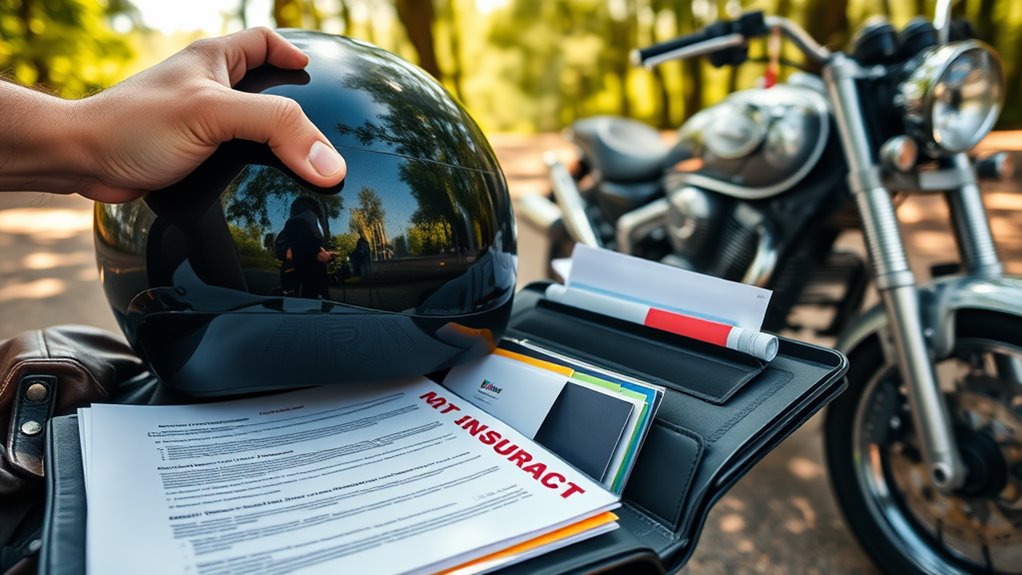
Keeping detailed records throughout the motorcycle accident insurance process is essential for substantiating your claims and ensuring a smoother resolution.
Start by obtaining the police report, which documents vital details like time, location, and witness statements. This official account strengthens your position with insurance companies.
Next, maintain thorough medical records that reflect your treatment, including emergency visits, prescriptions, and ongoing care.
Capture photographic evidence of the accident scene, vehicle damage, and your injuries from various angles to support your claims.
Document all correspondence with insurance representatives, noting dates and details.
Finally, collect witness information and their statements promptly, as these can corroborate your narrative.
Thorough records create a solid foundation for your case, enhancing your chances of a favorable outcome.
Conclusion
Maneuvering through the motorcycle accident insurance process can feel overwhelming, but following these steps will help you stay on track. By acting quickly and gathering all necessary information, you'll be well-equipped to present a solid case. Remember, the early bird catches the worm—don't let the insurance company take advantage of you. Stay organized, be proactive in negotiations, and consider legal assistance if needed. With diligence and attention to detail, you can achieve a favorable outcome.